1. Where to see it
Map and best places
Check what you will see from each point, in your local time.
Open the mapSolar eclipse · Total
The Moon completely covers the Sun's disc along a narrow path. Outside it, the eclipse is seen as partial.
1. Where to see it
Check what you will see from each point, in your local time.
Open the map2. Where to stay
52 / 100
Provisional score, among Starlight-certified places to stay.
See all places to stay3. What to bring
They protect your eyes during the partial phases.
See all gear4. How to photograph it
Work out your field of view and prepare your session before you leave.
Prepare the shotPlaces suggested by amateur astronomers and reviewed before publication. Visibility, duration and time are calculated for each one; the SkyScore doesn't yet include clouds or horizon.
Partial · maximum at 10:52:34 CEST
SkyScore 41
By inigojimenez
Verified Type and regions: NASA/GSFC. Time: astronomy-engine, checked against NASA. · Add to calendar (ICS)
The official maximum duration is 6 min 23 s, according to NASA, at the point of greatest duration on the central line. Those for each place are our own calculation (astronomy-engine, circular lunar limb) and reach 6 min 26 s in Sohag: a few seconds more because of the different model. Use them to compare places with each other; the reference figure is the official one.
Regions according to NASA: Africa, Europe, Mid East, w & s Asia [Total:Morocco, Spain, Algeria, Libya, Egypt, Saudi Arabia, Yemen, Somalia]
Add up to two places to compare them.
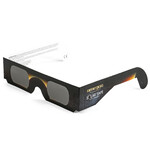
essential
They protect your eyes during the partial phases.
Never look at the Sun without protection outside totality. Ordinary sunglasses don't protect you. Check the manufacturer's marking and that they aren't damaged.
Omegon Sofi Solar Safe
Its product page states the ISO 12312-2 standard, CE marking and optical density 5. Check this on the packaging too.
See on Astroshop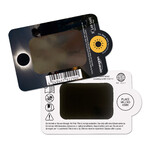
essential
Needed on telescopes, cameras and binoculars outside totality.
It goes in front of the lens, never on the eyepiece. Without it, the optics concentrate the light and can seriously damage your eyes and your gear.
Omegon Solar Safe Easy Cam
Its product page states the DIN ISO 12312-2 standard. Check this on the packaging too.
For phone cameras only. It is not suitable for telescopes, DSLR cameras or binoculars: we don't link to any for those yet, because we haven't found a product page that shows certification.
See on Astroshop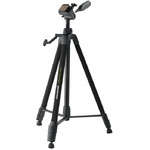
recommended
Keeps your framing steady for the whole eclipse.
optional
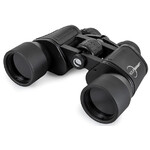
They show the Moon moving across the Sun, and sunspots, during the partial phases.
Use a filter outside totality.
Celestron 10x42 EclipSmart
Its product page states they meet the transmission requirements of ISO 12312-2. Check this on the packaging too.
The filter is fixed: they work for the partial phases, but you can't see the corona through them during totality.
See on AstroshopIn Ceuta, Melilla, almost all of the province of Cádiz, part of Málaga and the southern tip of Granada and Almería, according to Spain's IGN. The rest of Spain will see a partial eclipse.
Depending on the place, it starts between 10:44 CEST and 10:50 CEST, mainland Spanish time, in the mid-morning. The partial phases start a little over an hour before and end a little over an hour after.
At most, about 4 min 51 s in Ceuta, by our calculation with a circular lunar limb. The closer to the edge of the path, the shorter it is.
Nobody can know months ahead. In August, average cloud cover in the Spanish part of the path ranges from 18% to 36%, according to NASA POWER climatology (2001-2025). A real forecast only exists a few days before.
Yes. Wear ISO 12312-2 eclipse glasses during all the partial phases; sunglasses are not enough. Only during totality, and only inside the path, can you take them off; put them back on as soon as the first flash of sunlight reappears.